


Signs Your Cat Actually Like your Cat Sitter

Most cat owners leave a first booking with at least a little bit of guilt or worry, wondering whether their cat is coping with a new person coming into the house.
Cats can't tell you directly how a visit went, but they're not exactly subtle either, their body language and behaviour say a lot, if you know what to look for.
Positive behaviours
They Come Out to Greet the sitter
A cat that's comfortable will often appear within the first few minutes of a visit rather than staying hidden the whole time. A cat who consistently comes out, even just to sit nearby, is showing a level of trust that builds over repeat visits.
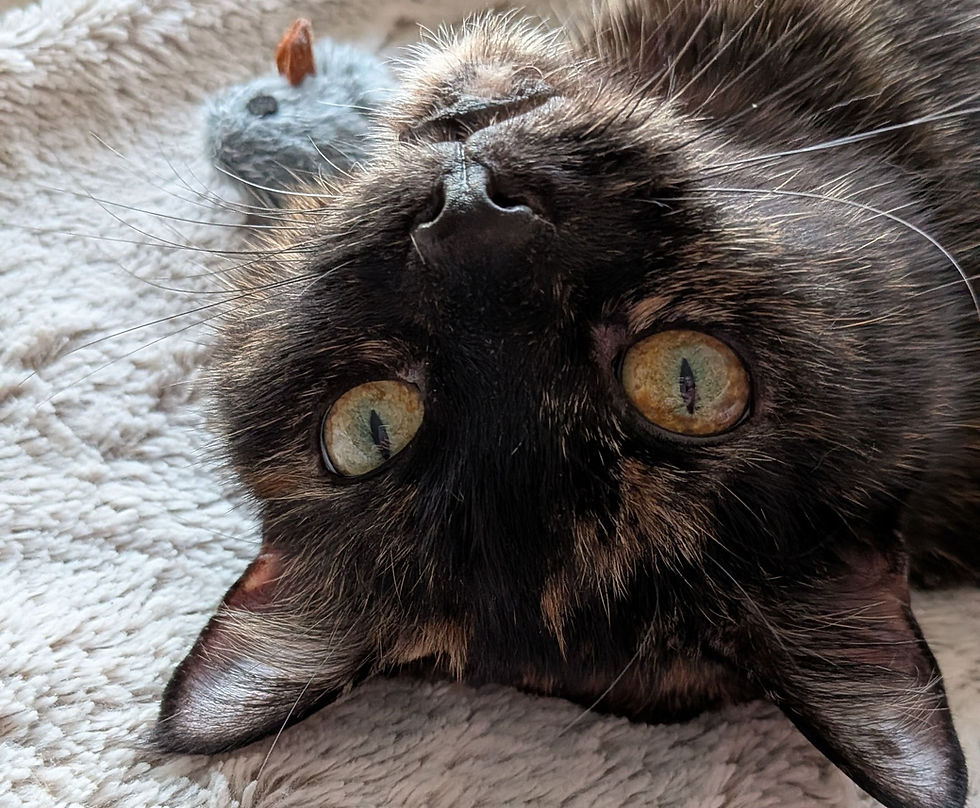
Slow Blinks and Relaxed Posture. A slow blink is one of the clearest positive signals in cats body language. If a sitter reports getting slow blinks, or if you notice your cat doing this with a sitter during a handover visit, that's a genuinely good sign.
Combined with a relaxed tail, ears in a neutral or forward position, and a body that isn't tensed or crouched all points to a cat who feels safe.
Eating Normally (or Better) whilst you’re away. Appetite is one of the most reliable indicators of stress in cats. A cat who eats on schedule or even seems more food-motivated around a sitter is generally relaxed compared to one who barely touches their food during visits.
Choosing to Stay in the same room as the sitter is a positive as cats vote with their feet. A cat who wanders off to another room the moment a sitter arrives, versus one who chooses to stay and observe (or actively seek attention), is telling you something about their comfort level.
Head Bumps, Kneading, and Purring which are all obvious indications of a happy cat.
If your sitter mentions any of these happening during visits, particularly with a cat who was stand offish at first, that's a strong sign the relationship is working.
Every cat adjusts at their own pace, and some cats simply take longer to warm up to anyone new. But if a cat is showing ongoing signs of stress (hiding for the entire visit, not eating, over-grooming, or litter tray avoidance) after several visits, it's worth a conversation with your sitter about adjusting the approach.
This may involve spending the first few minutes of each visit sitting quietly rather than approaching straightaway or trying a different visit time. Good sitting isn't just about ticking off feeding and litter box duties; it's about reading what a cat is telling you.
If you would like to get in touch to discuss your cats’ individual needs and arrange a visit before the cat sit starts so that your cat is more familiar this can be arranged.
Your cats’ best interests and well-being are always at the forefront of the services that I provide, and I want your cat to feel comfortable around me and ultimately happy.
Starting that initial conversation and providing detailed information about your cat is a good place to start and will enable us to build a suitable schedule that suits your cats requirements.
Please contact Rebecca
Portishead Cat Sitter
07557 022201
Thank you


Comments